
Large electrical cables require a routing system that provides dependable support while keeping installation and maintenance practical. In power distribution, industrial plants, infrastructure facilities, and utility projects, cable routes may extend over considerable distances and carry multiple large-diameter cables.
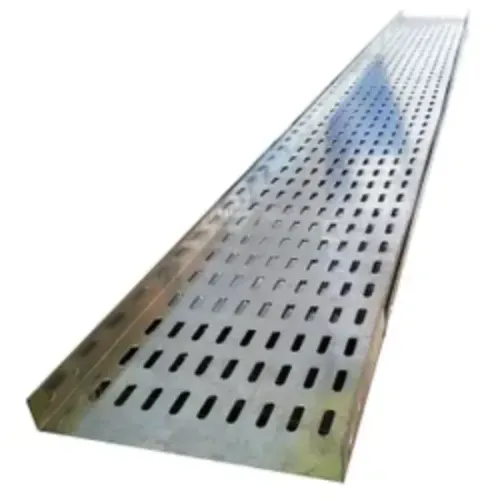
GI Ladder Type Cable Trays are commonly considered for these applications because their construction provides an open, structured pathway for cable support.
Knowing how ladder trays function helps electrical engineers and contractors determine where they fit within a project.
Understanding the Ladder Tray Structure
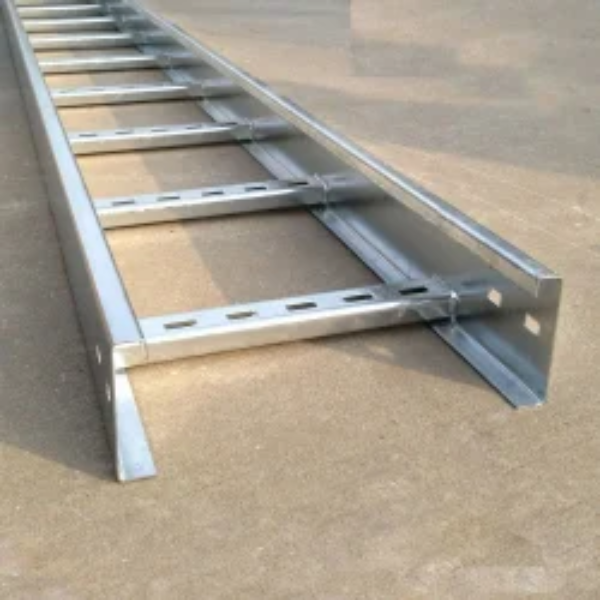
A ladder cable tray generally consists of two longitudinal side members connected by regularly spaced transverse rungs.
The arrangement resembles a ladder and creates an open structure. Cables rest across the rungs while the side members provide longitudinal strength.
This configuration offers several practical characteristics, including:
- Open cable routing
- Convenient cable access
- Reduced material compared with fully enclosed systems
- Easier visual inspection
- Practical support for larger cables
- Air circulation around cable runs
The appropriate tray configuration still depends on cable characteristics and engineering requirements.
Open Construction Helps Cable Access
Maintenance accessibility is an important consideration in industrial electrical installations.
The open structure of a ladder tray allows technicians to see cable routes and access cables from different positions. This can make tracing, inspection, and certain maintenance activities easier than with more enclosed routing arrangements.
It can also simplify the addition of cables when spare tray capacity has been planned correctly.
Cable Loading Needs Proper Assessment
The fact that ladder trays are commonly associated with larger cables does not mean every ladder tray automatically suits every heavy cable installation.
Engineers should calculate or establish expected loading based on cable quantities, cable weights, tray span, support spacing, and route configuration.
Special attention may be needed near:
- Direction changes
- Vertical sections
- Cable entry points
- Equipment terminations
- Long unsupported areas
- High cable concentrations
Appropriate supports and accessories are an integral part of the installation.
Why Galvanized Steel Is Frequently Used
Galvanized steel provides mechanical strength along with a protective zinc coating. The coating helps protect the underlying steel from corrosion under suitable service conditions.
The required galvanizing method and material specification should be selected according to project standards and environmental exposure.
Industrial locations can vary significantly. An indoor manufacturing unit in Bengaluru may present different conditions from an exposed utility installation elsewhere in Karnataka. Material specification should therefore reflect the actual project environment.
Ladder Trays Need Coordinated Fittings
Straight tray lengths represent only one part of the cable route.
Horizontal bends, vertical bends, tees, crosses, reducers, couplers, supports, and other accessories may be required to complete an installation. Planning these elements from drawings and routing information can reduce the amount of modification required at site.
Vickram Engineering works with project requirements involving cable tray and supporting cable management components, where dimensional coordination becomes especially important for extensive industrial routes.
Select the Tray Around the Cable System
A good cable tray design starts with the cables rather than the tray.
Engineers should establish cable types, quantities, loading, route, separation needs, environmental conditions, accessibility, and future capacity before deciding the tray dimensions and configuration.
For industrial and infrastructure projects, GI Ladder Type Cable Trays can provide an effective combination of open access and structured cable support. Their performance, however, depends on appropriate sizing, support spacing, material specification, fittings, and installation practices.
Treating the tray as a complete engineered pathway rather than simply a fabricated metal section creates a more dependable cable management system.