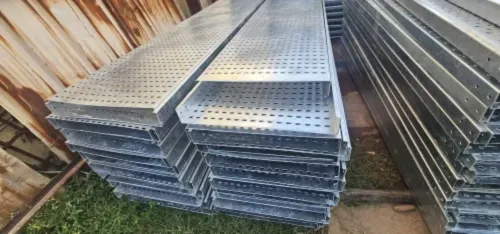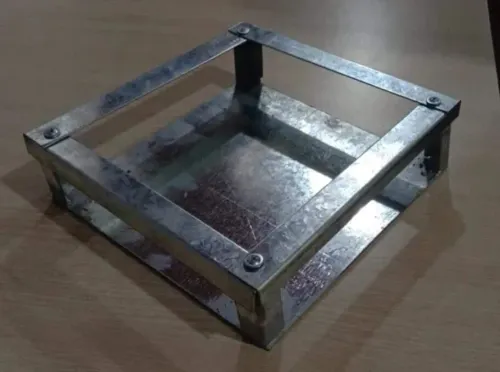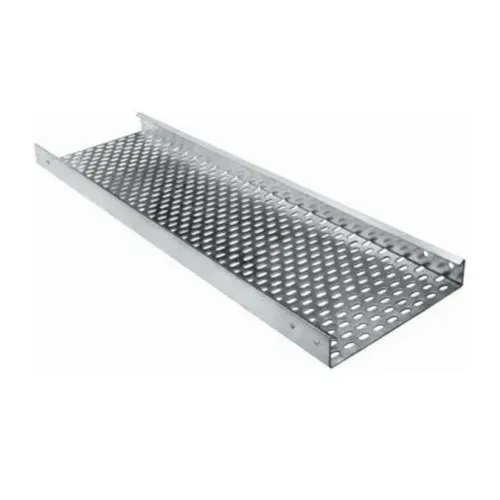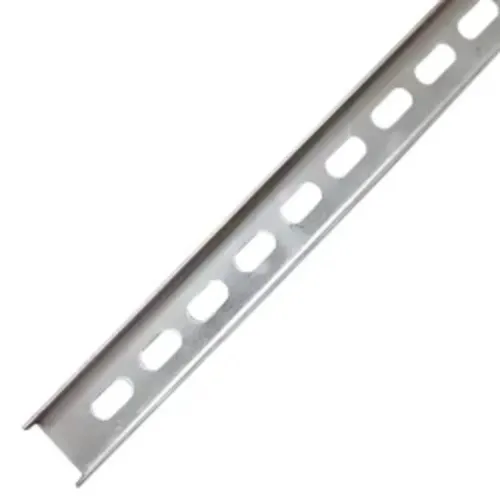
Rainwater, silt and trapped humidity can damage more than the visible tray surface: supports, fasteners, cable jackets and splice points can remain wet after the weather clears. You will be able to isolate the work area, identify coating loss and structural defects, decide between cleaning, repair and replacement, and document repairs for verification after the next wet season.
Key takeaways
- Isolate, lock out and verify absence of voltage before touching trays or cables.
- Check low points, overlaps, drain paths, fasteners and cut edges for trapped water or rust.
- Inspect supports, bonding jumpers, connections and cable jackets—not just the tray surface.
- Replace sections with structural loss; clean and recoat local coating damage when metal remains sound.
Start With Isolation, Access and a Post-Monsoon Record
Isolate the work area before you inspect galvanized cable trays for after monsoon exposure in Bengaluru. Obtain the electrical work permit, identify every circuit and supply that could energise the tray or its cables, and de-energise, lock out and verify absence of voltage where access requires contact or removal of covers.
Barricade wet floors, control work below the tray, and use a rated platform rather than climbing on the tray.
Begin with a dry, reachable section and record conditions before cleaning anything. Capture:
- Tray identification, route, level, room or outdoor location, and inspection date
- Photographs of the top, underside, side rails, supports, splice plates and cable entries
- Blocked drain perforations, silt, leaves, mud, bird nesting material and standing water
- Water trapped at splice plates, tray-to-support interfaces, wall penetrations and vertical transitions
- Visible white zinc deposits, red-brown rust, damaged coating and dirt staining
- Coating-thickness readings from a calibrated magnetic or electromagnetic gauge, logged by tray section rather than as one site average
- Fastener, support and bonding observations, cable-access restrictions, and repair status
Inspect underside surfaces and the inside of side rails; a top-side walkdown misses sediment that keeps these areas wet. Remove loose deposits without gouging zinc, and do not use abrasive grinding as routine cleaning. Photograph and mark actively corroding or damp locations so you can compare them after the next wet season.
Find Trapped Water, Corrosion and Coating Loss
Look first at drainage points and interfaces, not the clean top surface. A galvanized cable tray inspection in Bengaluru should start with these moisture traps:
- Blocked drain perforations filled with silt, leaves or mud
- Standing water beneath horizontal trays and inside side rails
- Splice plates, bolt holes, bends and tray-to-support interfaces
- Bird nesting material, roof-leak paths, wall splash zones and trench entries
Inspect the underside as well. Record each defect by tray section, then use a calibrated magnetic or electromagnetic coating-thickness gauge on damp areas and visible damage; appearance alone cannot prove that zinc remains.
Deposit or appearance | What it indicates | What to check
White, powdery film | Zinc oxide or zinc hydroxide, often called white rust or wet-storage stain | Light deposits can be cleaned without gouging and monitored; heavy or persistent deposits warrant thickness readings
Red-brown scale or pitting | Corrosion of the underlying steel after zinc depletion or damage | Check cut edges, welds, drilled holes and scraped areas; ordinary silver paint is not a galvanizing repair
Grey, brown or black smear | Dirt, silt, oil or nesting residue | Wipe or wash it away and recheck the metal; dirt should not leave pits or a spreading edge
Dark, wet staining with blistering, peeling or an expanding rusty boundary | Moisture retained beneath or around a damaged coating | Find the leak or blocked drain before cleaning; abrasive grinding is not routine cleaning for galvanized surfaces
Where copper, brass, stainless steel, aluminium or bare dissimilar metal touches wet zinc, inspect for galvanic attack. Retained conductive mud can accelerate it.
Inspect Supports, Connections, Bonding and the Cables
Judge fitness by evidence of load capacity and electrical continuity; an intact zinc surface proves neither. Inspect the load path from each tray section through its splice and support to the building structure.
Use these acceptance checks:
- Structure: find loose or missing fasteners, elongated holes, cracked welds, displaced supports, excessive deflection, and corrosion at anchor points. Pay special attention to splice plates, bolt-and-nut joints, tray-to-support interfaces, underside surfaces, and inside side rails where silt stays wet.
- Bonding: verify continuity across every tray joint and from the tray to the protective-earth system with a calibrated low-resistance tester. Clean corrosion beneath bonding jumpers and replace damaged jumpers; do not treat a painted or oxidised joint as electrically continuous.
- Cables: inspect outer sheaths, glands, vertical transitions, cleats, and low points for cuts, water entry, corrosion, or looseness. Remove leaves, mud, and nesting material that blocks ventilation; heat trapped around a cable can accelerate insulation failure.
A cable tray corrosion check in Bengaluru should include representative coating-thickness readings with a calibrated magnetic or electromagnetic gauge, including damp and visibly damaged locations. Record results by tray section, not only as a site average.
If a support has lost section, a splice cannot clamp tightly, bonding continuity fails, or a cable shows sheath or insulation damage, isolate the affected circuit and raise repair before returning it to service. Perform any insulation-resistance test under the approved electrical procedure and compare it with the project or manufacturer baseline.
Choose Between Cleaning, Repair, Recoating and Replacement
Clean and monitor deposits; repair damage that affects drainage, joints, bonding or support; replace steel that has lost section or cannot be restored without compromising capacity.
| Option | Use it for | Stop and escalate when |
|---|---|---|
| Cleaning and monitoring | Remove silt, leaves, mud, bird nesting material and white zinc deposits with a non-abrasive method. Record the location and recheck it after the next wet season. | Red-brown rust returns, spreads from a joint, or appears with pitting. |
| Repair | Clear blocked drain perforations, correct trapped-water paths, replace loose or incompatible fasteners, restore bonding, and treat small coating breaks after removing corrosion. | The tray is perforated, distorted, deeply pitted, or its support or splice cannot hold alignment. |
| Recoating | Apply an approved zinc-rich repair coating to clean, dry, localized steel where the remaining tray is sound. | Rust extends beneath the coating, corrosion is widespread, or damp interfaces cannot be cleaned and dried. |
| Replacement | Install a new section when steel thickness, rail shape, splice holes or support contact has materially deteriorated. | Do not reuse a section that needs extensive patching to carry cables or maintain bonding. |
For industrial tray maintenance in Bengaluru, verify the decision with calibrated coating-thickness readings taken by tray section, including damp and visibly damaged points. A site average can conceal one failed splice or underside.
When replacing, match tray width, load span, fittings, fastener material and bonding continuity; Vickram Engineering can confirm those compatibility details for a replacement section before fabrication. Record photographs, drainage condition, readings and repair status, then reinspect actively corroding or repaired areas after the next monsoon.
Related products
 | Galvanized Cable Tray Vickram Engineering's Galvanized Cable Tray is engineered to provide a strong, reliable, and corrosion-resistant cable support system for industrial,... View product → |
 | Ladder Type Cable Tray Product Description Vickram Engineering is a leading manufacturer and supplier of premium-quality Ladder Type Cable Trays designed for supporting and... View product → |
Close Out Repairs and Verify Performance After Rainfall
A defensible closeout links each defect to its repair, evidence and reinspection date. For industrial tray maintenance in Bengaluru, keep one record per tray section rather than relying on a general “passed” note.
- Record tray identification, exact location, inspection date, drainage condition, photographs and the visible corrosion type.
- Log coating-thickness readings from a calibrated magnetic or electromagnetic gauge, including damaged and persistently damp areas; identify each reading by tray section, not only as a site average.
- Note fastener and support condition, splice-plate interfaces, bonding jumpers or listed bonding provisions, and continuity results where the metallic tray forms part of the protective bonding path.
- Attach the repair description, cleaning method, replacement details, repair-coating product, application date and installer or inspector name.
- Include cable checks for damaged sheaths, failed glands, water entry at vertical transitions, corroded cleats and debris restricting heat dissipation.
- Close the work order only after photographs show clear drain perforations, no retained silt or standing water, secure supports, intact repaired surfaces and no unaddressed water path.
A galvanized cable tray inspection in Bengaluru should repeat the baseline walkdown after each monsoon. Reinspect every repaired or actively corroding section after the next wet season, and shorten the interval where water remains trapped, leakage continues or corrosion is advancing. Do not treat one clean post-monsoon report as permanent clearance.
Frequently asked questions
What should you do before a post-monsoon galvanized cable tray inspection in Bengaluru?
Obtain the electrical work permit, identify every possible energy source, de-energise the area, apply lockout and verify absence of voltage before contact or cover removal.
Where should you look for corrosion after monsoon exposure?
Inspect low points, tray overlaps, joints, drain paths, fasteners, support interfaces, cut edges and areas beneath covers where water and debris remain trapped.
What else needs inspection besides the galvanized tray?
Check support members, connections, bonding and earthing continuity, cable jackets, cable identification, sagging, water ingress and any displaced or overloaded cables.
When should you repair, recoat or replace a galvanized cable tray?
Clean and recoat limited surface damage when the steel remains sound. Replace sections with perforation, severe section loss, distorted load-bearing members or unreliable connections.
Related products
 | Fittings Vickram Engineering is a trusted manufacturer and supplier of high-quality cable trays designed for efficient cable management in industrial,... View product → |
Cable Trays The GI Bolt Nut Type Cable Tray is a robust and dependable cable management solution designed for safe routing and support of electrical,... View product → |
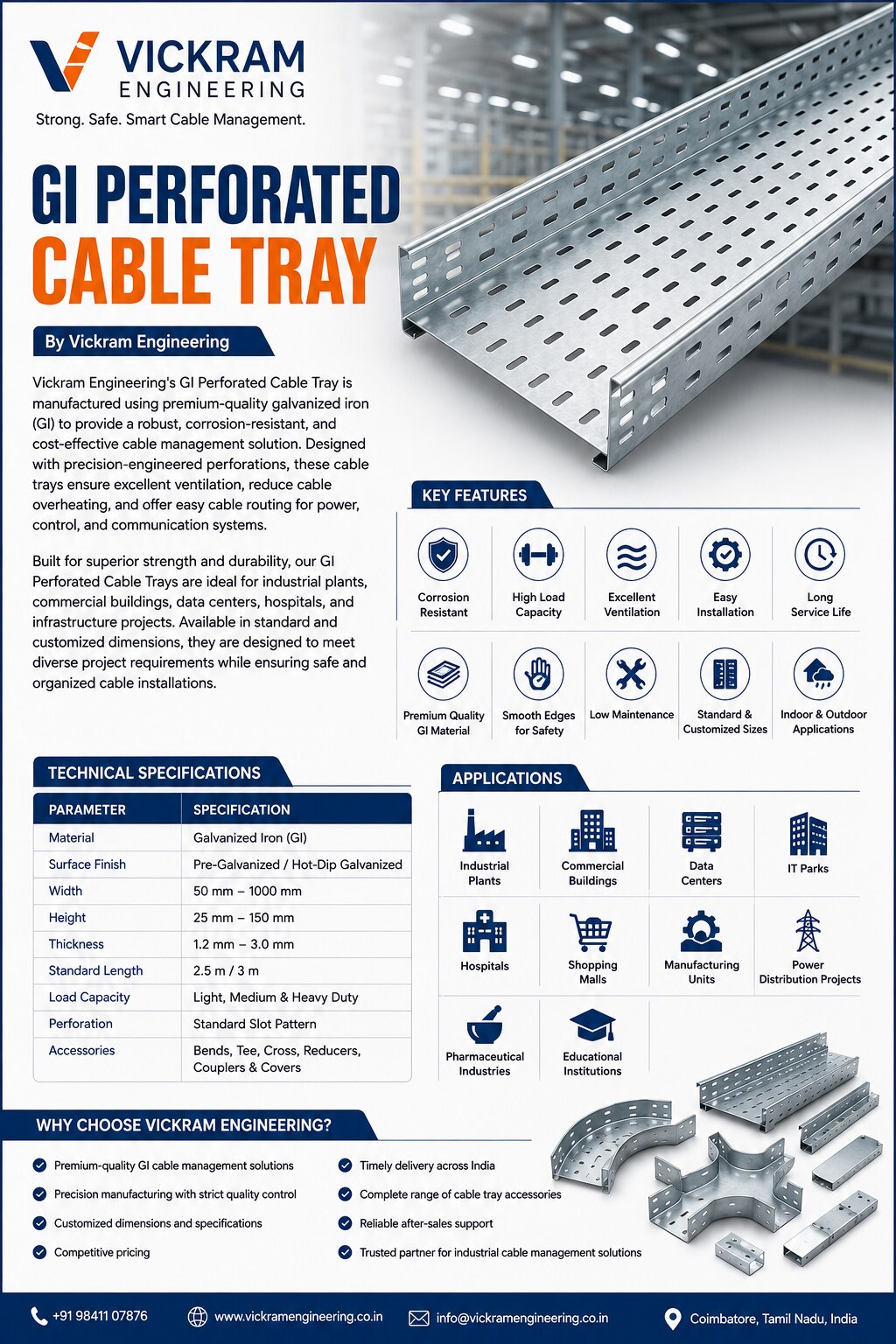 | GI Perforated Cable Tray Vickram Engineering's GI Perforated Cable Tray is manufactured using premium-quality galvanized iron (GI) to provide a robust, corrosion-resistant,... View product → |
Horizontal Cable Tray Bend Vickram Engineering's Horizontal Cable Tray Bend is a precision-engineered cable management accessory designed to facilitate smooth directional... View product → |
Keywords