A large cable-tray order can fail long before installation if the quotation omits load assumptions, finish requirements, inspection evidence, or delivery controls. By the end, you will have a supplier-comparison package that tests structural suitability, corrosion performance, manufacturing capacity, documentation, and site support on the same basis.
Key takeaways
- Issue one installed-system brief to every shortlisted manufacturer.
- Specify route, loads, supports, fittings, materials, quantities, and site conditions.
- Check standards evidence and quality records instead of comparing gauge alone.
- Score capacity, delivery control, installation scope, and technical support consistently.
Define the installed tray system before requesting prices
Send each manufacturer an installed-system brief, not a request for a price per metre. Quotations are technically comparable only when bidders use the same route, loads, materials, supports, fittings, quantities, and site conditions.
1. Provide route drawings showing tray width, depth, cable fill, cable weight per metre, future spare capacity, tray span, support spacing, allowable deflection, splice locations, cover weight, and accessory weight. Require a load/span table or project-specific calculation.
2. Add every design load: maintenance or concentrated loads, snow or ice, wind on covered tray, vibration, seismic effects, and thermal movement. For seismic design, state tray and cable mass, brace direction, anchorage, building attachment, and project seismic parameters.
3. Specify tray material, finish, drainage, isolation, and expansion-joint locations. Ask for the required installation gap at the installation temperature, support details, and bonding or jumper arrangements.
4. Include a corrosion-compatibility schedule covering tray, splice hardware, supports, cable armour, and building steel. A durable tray can still suffer galvanic attack at wet mixed-metal interfaces.
5. State fire requirements separately for tray supports, cable fire performance, firestop penetrations, and circuit-integrity systems, with the exact listing or test evidence required.
6. Attach tray and fitting quantities, support details, site locations, delivery phases, applicable standards, inspection documents, and replacement allowance.
Do not let nominal steel gauge decide the bid. Side-rail geometry, rung spacing, tray width, span, splice position, and load direction determine capacity; a standard uniformly distributed-load table alone does not prove suitability.
Test design claims against standards, loads, and the site environment
Accept a quoted tray only after the manufacturer states the exact design standard and edition used for each product family. NEMA VE 1 and IEC 61537 are not interchangeable acceptance schemes; their test arrangements, terminology, marking conventions, span assumptions, and load definitions differ.
Request a calculation for the installed system, not a standard uniformly distributed-load table. The schedule should include:
- Cable weight per metre, tray span, support spacing, allowable deflection, and future spare capacity
- Covers, splice plates, fittings, and other accessory weights
- Maintenance or other concentrated loads
- Snow, ice, and wind loads on covered tray
- Seismic loads, thermal movement, and resulting support reactions
Check whether the rating applies to a complete tested assembly or only straight tray. Reducers, tees, crosses, vertical bends, expansion joints, covers, and field-cut sections can control deflection or capacity; require ratings and installation details for the proposed configuration.
Treat a “seismic-rated” label as incomplete evidence. The calculation or test configuration must match the tray and cable mass, support spacing, brace direction, anchorage, building attachment, and project seismic parameters.
For outdoor or high-temperature runs, require expansion-joint locations, gap-setting instructions for the installation temperature, support details, and bonding or jumper arrangements. Finally, separate fire claims: tray material, cable fire performance, penetration firestop, and circuit-integrity systems need their own specified listings or test evidence.
Compare materials, dimensions, and quality evidence—not gauge alone
A 2.5 mm tray is not automatically stronger than a thinner tray. Allowable load also depends on side-rail geometry, rung spacing, tray width, support span, splice location, and load direction. Compare the approved drawing with the manufacturer’s load/span table and the stated edition of NEMA VE 1 or IEC 61537.
| Material | What to compare | Evidence to request |
|---|---|---|
| Pre-galvanized steel | Zinc protection at cut edges, drilled holes, and field modifications | Steel grade certificate, coating mass or thickness, and repair procedure |
| Hot-dip galvanized steel after fabrication | More complete coverage around welds and fabricated edges | Steel and galvanizing certificates, coating measurements, and repair records |
| Stainless steel or aluminum | Alloy grade, chloride exposure, mixed-metal contact, and fastener compatibility | Alloy certificate and corrosion-compatibility schedule |
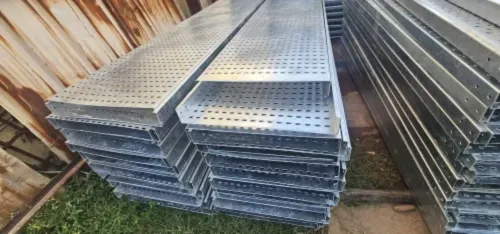
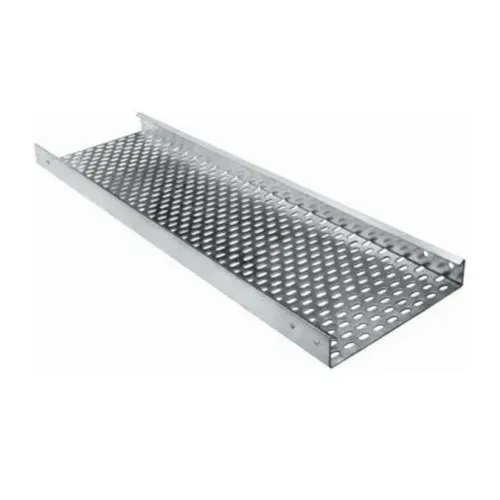
The approval package must state tray width and depth, side-rail height, rung spacing, standard lengths, bend radii, splice design, hole pattern, and support spacing. A generic “galvanized” description cannot prove compliance in a wet or chemically contaminated area.
Request these records for each production batch:
- Material test certificates identifying grade and heat number
- Coating or alloy certificates
- Dimensional inspection reports against the approved drawing
- Weld-inspection records where welded fabrication applies
- Batch traceability from raw material through dispatch
- Routine inspection plans and the documented process for nonconforming parts
Require the same evidence from subcontractors handling galvanizing, roll forming, welding, or accessories. A fire or material claim does not prove a fire-rated tray, penetration, or circuit-integrity system; ask for the specific project listing or test report.
Verify production capacity, delivery control, and installation responsibility
Ask for a capacity-and-support plan, not a statement that the factory can handle your order. Compare the proposed quantity with monthly output, raw-material availability, machine capability for the specified widths, bends, holes, welding, and finish, plus capacity reserved for damaged or missing replacements.
Request evidence in one checklist:
- Production schedule showing quantities by delivery phases, site location, dispatch date, packaging method, and buffer stock.
- Machine list and recent production records for comparable tray sizes, fittings, and support components.
- Subcontracting controls for galvanizing, roll forming, welding, or accessory production, including approved subcontractors, inspection points, traceability, and responsibility for rejected parts.
- Batch records, material and coating certificates, dimensional and weld-inspection reports where relevant, and the nonconformance procedure.
- A replacement commitment stating response time, spare capacity, remake approval, and who pays for correction caused by manufacturing error.
Confirm that delivery control continues after dispatch. Require packing lists tied to route sections, batch numbers, inspection release records, and a process for quarantining incorrect parts before installation.
Installation responsibility must appear in the contract. Name the supervisor, define who checks supports, bonding continuity, expansion-joint gaps, and fitting alignment, and require red-line records and a punch-list closeout. Apply this test to Vickram Engineering or any shortlisted manufacturer; a capable factory still leaves project risk if site support and replacement ownership are undefined.
Related products
 | Ladder Type Cable Tray Product Description Vickram Engineering is a leading manufacturer and supplier of premium-quality Ladder Type Cable Trays designed for supporting and... View product → |
 | Galvanized Cable Tray Vickram Engineering's Galvanized Cable Tray is engineered to provide a strong, reliable, and corrosion-resistant cable support system for industrial,... View product → |
Use one enquiry and evaluation scorecard for every shortlisted manufacturer
Make the final decision from one completed enquiry and evaluation scorecard, not from the most polished brochure. Mark every unanswered item as unresolved until the manufacturer supplies evidence; do not award compliance by assumption.
Send every shortlisted manufacturer the same enquiry package:
- Route drawings showing spans, support points, elevations, tray widths and depths
- Fitting schedules covering bends, tees, reducers, drops, covers and splice quantities
- Structural load schedule covering cable weight, spare capacity, concentrated maintenance loads, wind, snow or ice, seismic effects, thermal movement, covers and accessories
- Corrosion-compatibility schedule covering tray, hardware, supports, cable armor and building steel
- Delivery phases, site locations, inspection requirements and after-sales responsibility
Score the returned bids against identical criteria. Require the exact design standard and edition, such as NEMA VE 1 or IEC 61537, rather than accepting “international standard” wording.
| Criterion | Evidence to score | Hold or reject when |
|---|---|---|
| Design | Calculations, span and deflection data, marked drawings | Ratings cover only uniform loads or ignore project reactions |
| Materials | Coating type, minimum thickness or mass, repair method and compatibility | “Galvanized” is the only finish description |
| Manufacturing | Capacity plan, machine list, inspection records and replacement allocation | Output depends on unnamed subcontractors |
| Delivery and support | Programme, inspection points, packing method and named after-sales responsibility | No owner is identified for shortages, damage or replacement |
Apply the same pass/fail gates to every bid, record clarifications in writing, and compare total scored evidence rather than headline price. A manufacturer that leaves critical fields blank has not submitted a comparable offer.
Frequently asked questions
What information should you include before requesting cable tray prices?
Provide the route layout, cable types and loads, tray dimensions, material and finish, supports, fittings, quantities, site environment, delivery sequence, and installation scope.
How can you test a cable tray manufacturer’s design claims?
Compare claims with the specified load, support spacing, deflection limits, corrosion exposure, temperature, fire requirements, and documented test or standards evidence.
Why is tray gauge alone insufficient for comparing manufacturers?
Capacity depends on material grade, tray profile, width, depth, span, support arrangement, joint design, finish, and the installed load—not thickness alone.
What should you verify about a manufacturer’s production and delivery capability?
Check production capacity, raw-material control, inspection records, packing, dispatch milestones, batch traceability, replacement procedures, and responsibility for installation support.
Related products
Horizontal Cable Tray Bend Vickram Engineering's Horizontal Cable Tray Bend is a precision-engineered cable management accessory designed to facilitate smooth directional... View product → |
Cable Trays The GI Bolt Nut Type Cable Tray is a robust and dependable cable management solution designed for safe routing and support of electrical,... View product → |
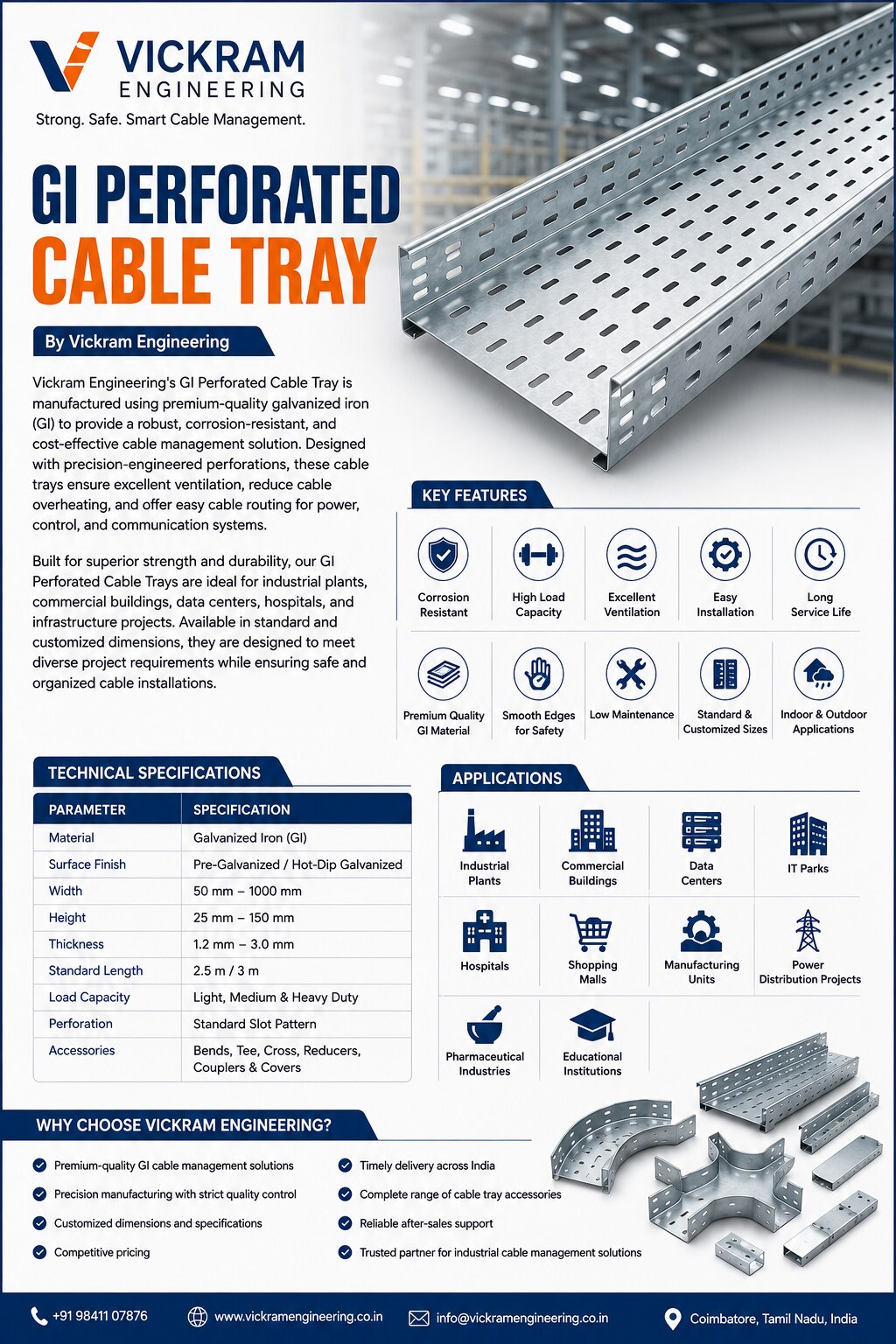 | GI Perforated Cable Tray Vickram Engineering's GI Perforated Cable Tray is manufactured using premium-quality galvanized iron (GI) to provide a robust, corrosion-resistant,... View product → |
 | Aluminum Cable Raceway By Vickram Engineering Aluminum Cable Raceway from Vickram Engineering is designed to provide a safe, organized, and durable cable management... View product → |