

Industrial electrical systems often carry large volumes of power cables that require strong structural support over long distances. In such applications, the Ladder Type Cable Tray is one of the most reliable cable management solutions available.
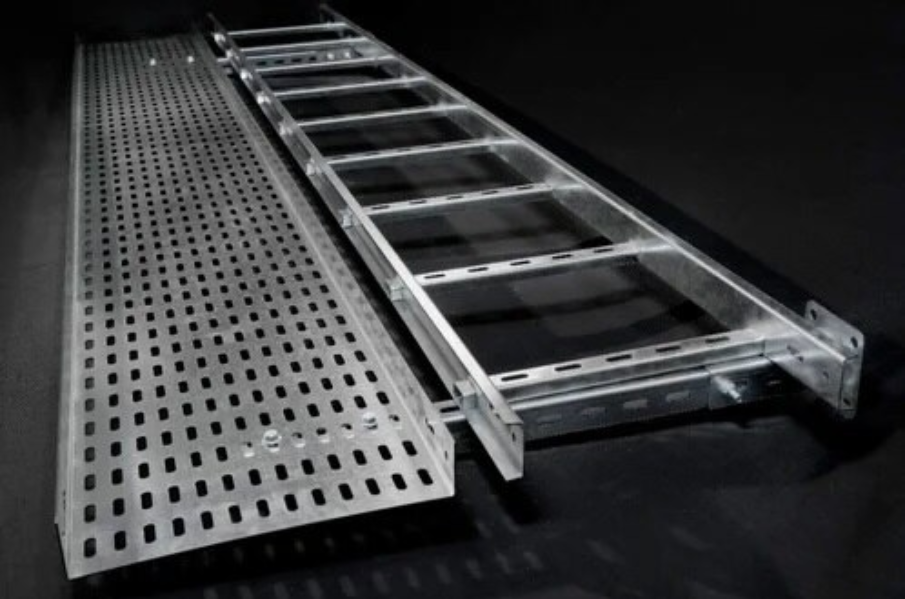
Recognisable by its two side rails connected by regularly spaced rungs, this tray design provides excellent mechanical strength while allowing maximum ventilation. Across manufacturing hubs in Bengaluru and Karnataka, ladder cable trays are widely used in facilities that demand efficient cable support for heavy electrical loads.
What Makes Ladder Type Cable Trays Different?
Unlike solid or perforated trays, ladder trays feature an open construction.
This design provides several advantages:
- Better heat dissipation
- Reduced dust accumulation
- Easier cable installation
- Improved inspection access
- High load-bearing capacity
These characteristics make them especially suitable for industrial power distribution.
Where Ladder Type Cable Trays Are Used
Heavy-duty cable systems are common in industries such as:
- Beverage manufacturing
- Cement plants
- Steel industries
- Power generation
- Chemical processing
- Water treatment facilities
- Large warehouses
- Infrastructure projects
The tray design supports thick power cables while maintaining proper spacing for ventilation.
Benefits for Industrial Operations
Excellent Air Circulation
Open construction allows heat generated by electrical cables to escape naturally, reducing operating temperatures.
Strong Structural Support
Ladder trays are capable of carrying significant cable loads over long spans when properly supported.
Faster Installation
Technicians can place cables directly across the rungs, simplifying installation compared to enclosed systems.
Convenient Maintenance
The open design allows easy inspection, cleaning, and cable replacement whenever modifications are required.
Selecting the Right Ladder Type Cable Tray
Several factors influence product selection.
Consider:
- Cable weight
- Span length
- Environmental conditions
- Support intervals
- Future expansion
- Corrosion protection
- Required tray width
Engineering calculations help ensure safe long-term performance.
Common Installation Recommendations
For dependable operation:
- Maintain proper support spacing.
- Use compatible bends and connectors.
- Avoid exceeding load ratings.
- Secure cables where necessary.
- Follow applicable installation standards.
- Conduct regular inspections.
These practices contribute to reliable electrical infrastructure throughout the facility.
Supporting Efficient Industrial Infrastructure
Well-planned cable management improves maintenance efficiency, reduces downtime, and supports organised electrical systems. As industrial facilities modernise across Bengaluru, selecting suitable cable tray systems becomes increasingly important for operational continuity.
Manufacturers like Vickram Engineering supply ladder type cable trays and related cable management products that are designed to support a wide range of industrial electrical applications.
Whether used in beverage production plants, engineering facilities, or large manufacturing units, ladder type cable trays continue to be a preferred choice for heavy-duty cable routing because of their durability, accessibility, and dependable structural performance.