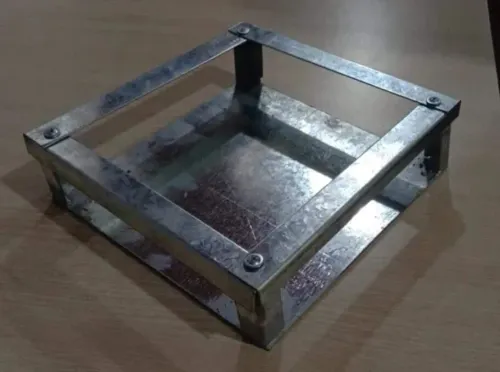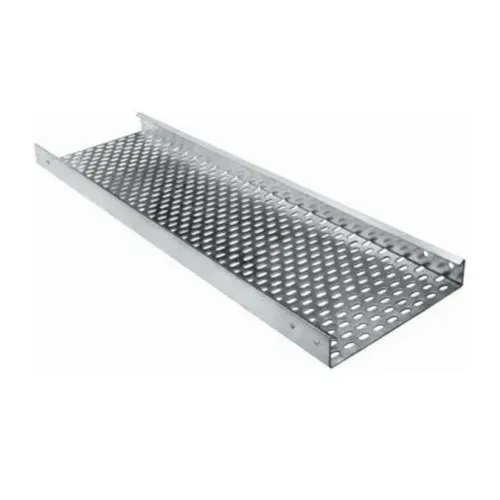
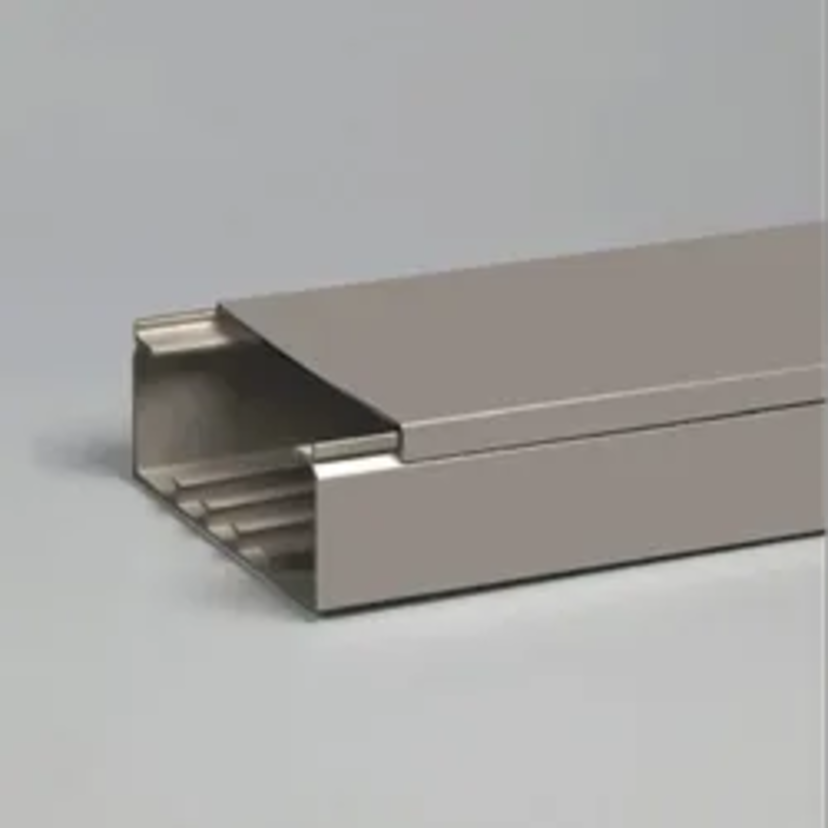
A quote for a GI raceway is incomplete if it gives only a nominal width and a price. You need to compare the product family, steel and coating, usable cable space, environmental suitability, fittings, load evidence, and quality records before choosing a manufacturer. By the end, you will have a specification and inspection checklist that separates a complete, compatible system from a visually similar component.
Key takeaways
- Identify tray, ladder, trunking, wireway or surface raceway before requesting quotations.
- Calculate cable fill, bend space, spare capacity and support spacing from the installation layout.
- Match steel grade and coating to moisture, chemicals, temperature and outdoor exposure.
- Request test reports, dimensional drawings, accessory lists and bonding details before approval.
Define the Raceway Type Before Comparing Manufacturers
“GI raceway” is not a product specification. Confirm whether you are buying a cable tray, cable ladder, covered trunking, wireway, or surface raceway before comparing manufacturers; IEC 61537 covers cable-tray and cable-ladder systems, while IEC 61084 covers cable-trunking and cable-ducting systems.
| Product | Choose it when | Wrong choice when |
|---|---|---|
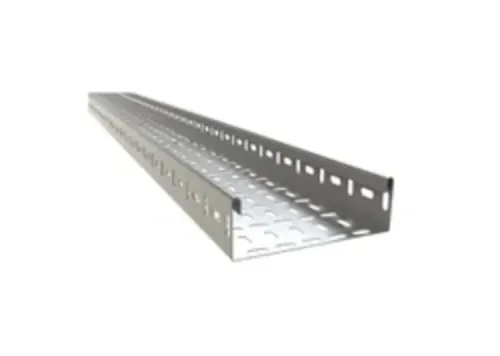
| GI raceway or covered trunking | You need enclosed, protected routing through dusty areas, corridors, or accessible interiors. | Do not use it where heat dissipation, frequent cable changes, or a verified IP rating for the assembled joints and entries is essential but unavailable. |
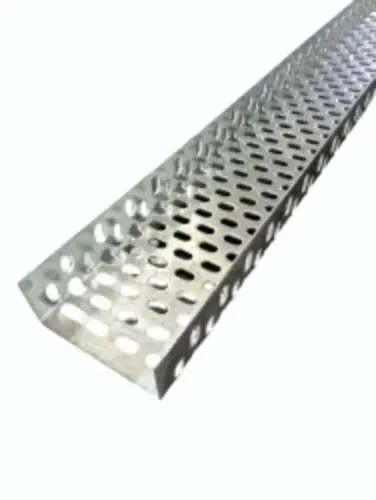
| Perforated cable tray | You need ventilation, visible inspection, and economical support for grouped power or control cables. | Do not use it where falling objects, washdown, or unauthorised access requires a closed enclosure. |
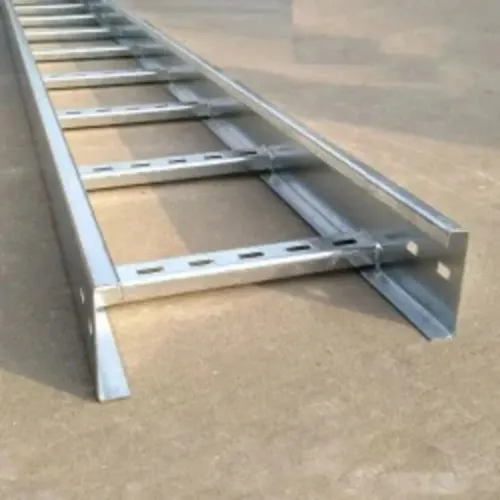
| Cable ladder | You need maximum ventilation, heavy cables, long spans, or easy access from below. | Do not use it where small cables need continuous bottom support or where debris protection is important. |
| Wire-mesh tray or surface raceway | Use mesh for light, flexible routing and surface raceway for neat, accessible runs in finished spaces. | Avoid mesh for heavy unsupported cables and surface raceway for high-impact, high-temperature, or industrial outdoor exposure. |
Then compare the complete system, not a catalogue width. Request usable internal dimensions, fitting bend radius, cover and divider clearances, and the load rating with its support span, splice position, cable distribution, and deflection limit. A wider raceway does not automatically provide the ampacity or restraint of a ventilated ladder.
Size the Raceway From the Cables and the Installation
A 100 mm nominal raceway may provide far less than 100 mm for cables. Start with each cable’s cable outside diameter, calculate the occupied cross-sectional area, and compare it with the manufacturer’s usable fill area after deducting covers, divider clips, splice plates, side-rail flanges, and cleats.
Add spare capacity for identified future cables, not an arbitrary empty strip.
| Sizing input | What to verify | Why it matters |
|---|---|---|
| Bend geometry | Minimum inside bend radius for every bend, tee, reducer and entry fitting | A straight section can fit the cables while a bend forces them past their permitted radius |
| Internal space | Clear width, clear height and usable fill area with accessories installed | Nominal width does not show the space left after covers and fittings are fitted |
| Circuit arrangement | Divider positions and separation for power, control, instrumentation, communications and intrinsically safe circuits | Mixed circuits can create interference or violate required segregation |
| Installation forces | Support spacing, cable cleats and restraint at changes of direction | Tray load per metre does not prove resistance to vibration, seismic movement or short-circuit forces |
Ask for dimensioned drawings of the complete fitting range, not only straight sections. Check the largest cable against the fitting’s bend radius and confirm that entry accessories preserve it.
Treat cable fill and ampacity as separate decisions. Cable construction, grouping, ambient temperature and ventilation determine allowable conductor current under the applicable code; a wider enclosed raceway does not provide the same cooling as an open ladder or tray. Include route length, access for pulling and future expansion before approving the dimensions.
Match Steel, Coating and Corrosion Protection to the Site
Select the steel and zinc process from the installation environment, and demand records rather than a generic “GI” label. A specification should name the base-steel grade, sheet thickness, coating process, coating designation or coating thickness, and applicable standard edition. Galvanized steel means zinc-coated steel, not solid galvanized iron.
Pre-galvanized steel suits controlled indoor areas where forming, punching and cutting will not leave exposed edges. Hot-dip galvanized steel applied after fabrication generally gives more complete coverage on joints and fabricated parts, making it a stronger choice for outdoor, coastal, chemical, wash-down or continuously damp locations. These processes are not interchangeable.
Require the following before approving the raceway:
- Mill certificate identifying the steel grade and heat or batch number.
- Galvanizing certificate or coating record stating zinc coating mass or coating thickness, with actual thickness measurements rather than only a salt-spray-hour claim.
- Written corrosion suitability assessment covering humidity, drainage, salt deposits, chemicals, wash-down water and contact with wet concrete.
- Repair procedure for cut edges, drilled holes, welds and transport damage; zinc-rich paint is not automatically equivalent to the original coating.
- Interface details for copper, aluminum, stainless steel and concrete, including compatible fasteners and isolating washers or pads where galvanic corrosion could occur.
- Outdoor submittal showing cover overlap, water-shedding joints, drain paths and the permitted orientation of each fitting.
Reject a supplier that cannot trace coating results to the supplied batch or explain how field damage and dissimilar-metal joints will be protected.
Check the Complete System: Covers, Fittings, Supports and Bonding
Require a coordinated shop drawing and sample assembly before approval. It should show straight sections, raceway covers, bends and tees, reducers, crosses, vertical bends, splice plates, supports, dividers, and cable-entry accessories as one compatible system, not as separate catalogue items.
Ask the manufacturer to state:
- Usable internal width and height after side-rail flanges, divider clips, splice plates, and covers are installed.
- Minimum inside bend radius for every fitting, including vertical bends, against the largest cable’s required radius.
- Rated load for each fitting and splice assembly, with the cable distribution, support type, support span, splice location, tray width, and allowable deflection.
- Cover overlap, drain openings, water-shedding orientation, and sealing details for outdoor sections.
- Physical separation options for power, control, instrumentation, communications, and intrinsically safe circuits.
- Continuity test results or a documented protective bonding design for painted, galvanized, and flexible-jointed connections.
Do not accept one load figure for straight sections as proof that an elbow or tee is adequate; changed geometry and splice locations alter the load path. Check the assembly against IEC 61537 and, where specified, NEMA VE 1.
On site, bolt together representative sections, fittings, covers, and supports, then inspect cable clearance, cover fit, drain paths, and bonding resistance across every joint. Paint, zinc buildup, and ordinary bolted joints can interrupt continuity, so require dedicated bonding jumpers where the design calls for them.
Build a Manufacturer-Selection and Inspection Checklist
Reject a quotation that gives only nominal width, catalogue photographs and a unit price. A dependable supplier can connect each delivered section to its steel source, coating process, dimensions, load basis and inspection result. Apply this test consistently when comparing GI raceway manufacturers in Bengaluru.
- Request the mill certificate showing steel grade, heat or batch number, sheet thickness and supplier identity. Match it to the delivery label.
- Require dimensional tolerances for width, height, length, cover fit and hole position. Measure sample sections, usable internal width and the smallest bend radius, including fittings.
- Ask for coating thickness or zinc mass, galvanizing method, repair procedure after cutting or welding, and inspection records. Check coating readings at edges, joints and fabricated bends.
- Demand the stated standard edition, load test or calculation basis, standard lengths, divider and fitting availability, and a documented bonding method. Test continuity across bolted joints on site.
Use the same checklist with Vickram Engineering: a comparable quotation is meaningful only when its evidence matches competing offers.
| Check | Dependable evidence | Low-cost warning |
|---|---|---|
| Material | Traceable grade, batch and certificate | “GI sheet” with no heat number |
| Dimensions | Recorded tolerances and measured samples | Nominal width only |
| Finish | Coating readings and repair procedure | Zinc-rich paint described as equivalent to galvanizing |
| System fit | Covers, bends, dividers and splice parts tested together | Straight sections shown without accessories |
Related product
 | Cable Raceway Systems The GI Raceway with Cover is a premium cable management solution designed to provide complete protection and organized routing of electrical,... View product → |
Frequently asked questions
What type of GI raceway should you specify?
Define whether the system is a cable tray, cable ladder, covered trunking, wireway or surface raceway. IEC 61537 covers cable-tray and cable-ladder systems, while IEC 61084 covers cable-trunking and cable-ducting systems.
How do you size a raceway for electrical cables?
List cable diameters and quantities, calculate the required fill area, allow space for bending and separation, and include spare capacity. Check the route length, bends, access points and support spacing before selecting dimensions.
How should you choose corrosion protection for a GI raceway?
Match the steel and coating to indoor or outdoor exposure, humidity, salt, chemicals, temperature and washdown conditions. Ask the manufacturer to identify the base material, coating process, coating thickness and inspection method.
What should you check beyond the raceway body?
Review covers, bends, tees, reducers, couplers, supports, clamps, fasteners, bonding jumpers and earthing provisions as one compatible system. Request drawings, load data, test evidence and installation instructions before approval.